Thursday, March 1, 2012

Liz on Vietnam

                              Mark your calendar: Da Lat International Flower Show Jan 2-5, 2014.


Willow Tree with Red Flowers at Da Lat Train Station


In Da Lat I rode behind Traum, a guide in his 40’s on a motorbike while Loi drove Mike on a one day tour by their company Free Riders. They toured us around Da Lat all day for $10 per person. For more on the sights in Da Lat see Mike’s blog. For me Traum was a hit because he revealed his pain as follows. I told Traum that we live near Detroit and that Detroit is near Chicago. Traum responded that his brother used to live in Chicago and is now in Vancouver, that his brother is a nuclear scientist. I asked Traum about visiting the US . He said that his brother takes no interest in him, expresses no love for him, that his brother visits every few years and spends 15 minutes with him. Traum spoke good English and is truly bright and likeable. I gave him heartfelt condolences about his impossible brother and suggested that his brother has Asperger’s Disease. Asperger’s is a disorder identified in 1944 and characterized by severely impaired social skills, repetitive behaviors and a narrow set of interests. Traum descends from a hill tribe, the Kihn. He taught me to mount the bike first and always wait for him to dismount first. He told us that Kihn are a matriarchal tribe where men move in with their wives’ families after marriage. Women manage the money, inheritance and are key decision makers. Many Kihn men enjoy the freedom to hunt, fish or ride around on motorbikes all day.
                                               Liz and Free Rider Guides, Traum and Loi


Looking at The Cash Crop: Vietnam : World's 2nd Largest Coffee Exporter inbetween Brazil and Columbia.


Free Rider Tour Motorbikes

                                                              Kihn Hill Tribe Matriarch

                                  Kihn Houses today sit on shorter stilts. Risk of Tiger Attacks is past.


                                    Out-of-focus but this is the Kitchen in a Kihn House.
We are embarrassed to intrude but the Kihn accept tourists or so the Tour Guides say.

Traum had the good judgment not to try to sell us on a 5 day motorbike trip from Da Lat up the Pacific Coast past Nha Trang to Hoi An. Mike’s guide Loi tried hard to sell us this trip. Loi appealed to us with his need to support 3 children and their schooling costs of $100 per month. His father served in the ARVN (South Vietnamese Army). Loi was one of 12 children and suffered to find work because his family was on the loosing side, the American side. Thankfully Mike and I had discussed such a motorbike trip before their sales pitch so we knew that we did not want to spend 5 days on small slow bikes. We said “No” in unison and closed the issue over lunch without confusing these men or getting their hopes up.
They were a bit sullen after we told them no tour. What we really wanted to know was how they get motorbike parts and keep their bikes in good condition but they were tired of speaking English and refused to explain. But they drove us to get airline tickets for a flight from Da Lat to Da Nang. We tipped them well and said goodbye on good terms.

This Hoi Ann hotel is superb for $25 except the mattress is firm like plywood.
Good that we can sleep on anything.

The mattress in the Thanh An II Hotel in Hoi An feels like plywood with a cotton cover. Talk about firm! It is as good as a gym floor without a mat for doing sit ups. Otherwise the hotel is great. Flagstone floors in bathroom with latest modern fixtures, tile floors elsewhere, soft brown (not oppressive Imperial black) wooden furniture as nice as my old bedroom set appoint our hotel room. Breakfast is included in our $25 per night stay with a variety of fresh French breads, muffins, juices, fruits, eggs, ham, sliced cucumber and tomato. This is a step way above a US Comfort Inn breakfast (box of little donuts or bagels, coffee and instant OJ). Thanh An adds dragon fruit, sliced fresh pineapple, sliced sweet oranges, boxed milk and hot dishes like fried rice, even corn soup. While eating Mike was brought a Western omelet he had not even ordered.

                                                                  Needlework in Hoi An


In Hoi An we met Bronte, an Australian Vietnam era vet and his 3rd wife Erica. Their candor and energy really added sparkle to our mornings. Bronte explained with a glow how the Australian government gradually recognized the issues of PTSD in their vets and provided psychological assistance, an admirable admission that I have rarely heard. Bronte and Erica began visiting Asia for inexpensive holidays and buying handmade crafts not just as gifts but to sell at shows. They sold in craft fairs and soon other dealers asked them for their beautiful and unique items. Now they broker handicrafts from Thailand, Vietnam and Laos to dealer friends in Australia.
Erica, we hope to see you and Bronte in the USA and we invite you to spend a week in our motor home! Dear reader, you are invited too. However if you are an American you already know that America’s retail scene include miles of empty stores. On-line purchasing and the phenomenon of the “new” mall and the beltway around town ended most downtowns. Somehow developers keep borrowing money to build a new mall that puts the others malls out of business. US retail is so overbuilt. (Will Occupy Wall Street ask how developers keep getting loans to undermine existing retailers and build more malls destroying more farmland in the process?) Erica, as I said, you won’t like seeing all the empty shops and big box stores that litter the US. I won’t even begun to describe low cost Wal-Mart, the most gigantic, innovative and paradoxically pernicious retailer of all but the 2006 book, The Wal-Mart Effect - How an Out-of-town Superstore became a Superpower is worth reading.

So nice to see fresh produce in Vietnam after feeling scarcity in Cambodia.

                                                                    Weaver in Da Lat.


After touring coffee farms in Da Lat we discussed coffee with Erica and Bronte from Adelaide. Vietnam is the second largest coffee producer in the world after Brazil and followed by Columbia and Indonesia. They asked if we’d heard of Starbucks. Their sentiments matched those of other Australians we‘d met who consider the flavor bitter. The very question is humorous since it highlights the failure of Starbucks in Australia and its massive hold in the US. Australians are glad The Starbucks that opened in Adelaide failed. They like Gloria Jeans and many other coffee brands better.

                                          Back to coffee in Vietnam. Coffee is a cash crop for Vietnam and especially its hill tribes. Cash from coffee explains luxuries like TV satellite dishes and motorbikes in front of wooden shacks with dirt floors where cooking is on the floor over a fire. The shacks are no longer set up on high stilts because the risk of attack by wild animals like tigers has ended. Coffee in Vietnam is served in a cup with saucer with a small aluminum drip filter placed over the cup. Mike says the consistency is more like coffee syrup.
                                                           Coffee Beans from Luwok, a weasel.
                     The Vietnamese raise the weasels just like the Balinese. They like the profit margin too.

Tea is served with a cup and saucer and a tea bag. Choices are Vietnam tea, Lipton or green. We have not seen mugs since New Zealand.

Next stop is Hoi An. We take a cab from Da Nang to Hoi An. Like Melaka, Malaysia, Hoi An is a UNESCO Heritage site. Many historic restored buildings along with 300 to 500 tailor shops line the streets of this internationally popular tourist town. Lovely American girls tell us that they got fitted for custom-made clothes since they are so inexpensive. I will dress casually to live in a motor home for the next few years and do not want clothes tailored. Anyway dear reader if you would like inexpensive custom-made clothes in a day or two or if your teen needs a prom dress or if a bridal party needs outfitting, order the clothes in Hoi An. While you wait, visit historic buildings and the nearby beautiful and half-deserted beach. That is a true visit to Hoi An.
Mike had a foot wound that has since healed. The process taught us things like an ace bandage is $1.25. He painted the wound daily with mercurochrome. I mentioned this wound at breakfast to Erica from Adelaide. She called her local friend and e-mailed back the choice to visit a pharmacy or a hospital. Since we mucked around with pharmacy already I was done guessing, I asked the front desk for map to hospital. The desk offered to call a doctor. A doctor was by Mike’s side in our hotel room in under 20 minutes. He charged $50 and provided a travel insurance claim form. As promised his English was very good; he said his brother lives in Des Moines. Mike unwrapped his Ace bandage and showed the doctor. The doctor said oozing is preferred with feet and dismissed the wraps. He applied goofy little Band-Aids. He even put the sticky adhesive in the wound. He gave Mike 40 band aids and amoxicillin, 3X’s per day. Feet are near the ground for greater risk of infection. (No chance of MRSA here; not nearly too clean though Vietnamese clean well daily). Band-Aid definitely has an untapped market of 88 million here. One size cannot fit all. As of this writing Mike’s wound has healed.
We visited 3 pharmacies and found they all sell only one size of Band-Aid. In poor Cambodia that was understandable. In the far more prosperous Vietnam the lack of various sizes of Band-Aids underscores that this is not a consumer society. I envision Band-Aid export business using Vietnamese TV commercials. One little band aid and one width of gauze is all that is sold to a market of 88 million. I would not have believed if I did not experience it first hand. I left so many bigger ones behind for surfers in Hawaii!

                        Vietnamese Sleeper Bus. Good thing we rode for just 5 hours in an afternoon.
                              When my elegant Norwegian neighbor boarded the bus ($4 trip) I know she said
                                           "You've got to be kidding" in Norwegian. No shoes allowed.
                                                             The front of bus reeks of feet.


After a 5 hour ride (for $4 per person) from Hoi An to Hue we urgently needed a bathroom and we don‘t have a hotel reservation. After Chinese New Year is over in Asis hotel reservations are not necessary. At the bus stop a man asked if we’d stay in his hotel. We appreciated personal enterprise and asked where his hotel was. And how much. It was right in front of us and cost $12. Due to urgent bathroom pressure we took this 2nd floor walk up without delay. The walls need fresh paint and the electrical system is poor, fluorescent lights, but the offset is an ornate twelve foot ceiling and 8 foot hardwood doors. We sleep on a hard double bed. 2 towels are included but no top sheet. It includes 2 twin beds so a family might easily stay here too. The old TV is the first we’ve encountered without a remote. Private bathroom with small tub, a fridge with beer, water and coke, a desktop computer and 2 big black wooden chairs with a matching tea table and tea set complete the room.

                   We stayed here for $12 per night initially because we really needed a bathroom.
When we order dinner at a nearby restaurant we ask for 2 glasses of red wine and a large bottle of water. Instead we get 2 wine glasses and an uncorked bottle of white wine. Considering the language barrier this is OK. Mike has Bun Bo Hue, a spicy and delicious Pho’ and I share a 4 course set dinner of chicken egg drop soup, spring rolls, rice, a small thin tuna steak covered with tomato sauce and a chocolate covered banana pan cake for dessert. Check is $12. Tips are not expected. The French conditioned the Vietnamese and the French do not tip; they dislike the very idea of tipping.


We eat out 3 times per day which is a lot of fun after years of grocery shopping, cooking, managing leftovers, cleaning up the kitchen, etc... My only exclusive task is doing laundry. I use detergent purchased in New Zealand. I wash and rinse out our clothes in bathroom sinks and tubs, then wring them out and hang them to dry. This is my routine since we arrived in Asia. Once in Thailand ($15) and once in Cambodia ($2.50) we sent laundry out. Our REI store brand shirts and underwear dry fast. Cotton takes longer.
The Hue City Tour took all day and was a drag. Our guide Sen smiled frequently in a warm and welcoming way. She had a great friendly attitude but her accent was so hard to follow that she was a strain. Some sights in Hue were 19th century and of negative merit. We saw a mausoleum built during the 1930s, so pompous that taxes were raised 30%. What commodity was taxed? Newborns. This gross castle was built when the US was building the Hover Dam. People were enslaved, overworked and starved to build this grossly shameful mausoleum. Meanwhile our guide Sen’s English is self taught. She tried so hard and she speaks so much that later when she and I are alone she confides that she must take time off to rest her voice. I assure her that she needs to say far less and just keep smiling and the tourists will be just as satisfied.


                                                          Sen, our Hue City Tour Guide


1930's Mausoleum, Cost tax increase of 30% for cruel King. Workers were enslaved, overworked and     starved to death.

Sustainability is Asia’s most striking trait. They will cut their profit margins in the face of rising prices for commodities like food and oil. They work themselves to no end just to keep their market share and strive to expand in every market possible. Asians are the fiercest economic rivals imaginable. Expansion especially as far as building construction is suspect. Are projects in process or suspended? Asian growth rates are 7-8% but that growth is on the back of labor.

No water bottles appear as litter in Southeast Asia. No cans or bottles litter anywhere here. Scraps of paper or plastic may litter road sides but not bottles. Every vendor takes back empty bottles like you are handing them money which is probably the case. The Siem Reap Hostel showed bottles used as filler in walls.
Limited use of paper products occurs in public venues. Dishes are washed. Cloth towels hang in nice restaurants for drying hands. Meals include thin paper napkins and toilets sometimes have toilet paper. The society does not offer paper towels, paper plates, cups, lids or plastic utensils.
We stay in the old quarter of Hanoi. Like cities in Europe the old quarters in Asian cities are ideal for tourist hotels and restaurants. Near our hotel are streets full of stalls selling shoes. I shop for a pair of athletic shoes that range from $13 to $35 with Adidas and Nike labels. Do you know people who collect shoes in the USA? They may buy on-line from a catalogue or they go to a box store or they just shop the local malls. Here in Hanoi I observed a new method of shoe shopping. The shopper is a nicely made-up lady on a motorbike. While she slowly goes by shoe stalls on her bike she looks for new items. She pulls her bike up on the sidewalk if she sees a pair she likes.
Along with 2 glasses of red wine, fried rice and noodle soup we ordered oysters for $12 total. Instead of oysters we got clams last night. The menu said oysters for roughly $1.50. I even asked how many oysters came with an order. The waitress said it would be a plate full. When I said that we call these clams not oysters the answer was that they’re the same thing. Considering the price we would never complain but just possibly attempt to clarify. Ordering seafood in Hanoi and throughout Vietnam is smart because it is a completely coastal nation. The fish is fresh.

They refer to the South China Sea as the Western Pacific Ocean. The Vietnamese do not pay tribute to China if they don’t have to. They fear China. They still regret that the US did not take Uncle Ho Chi Minh’s side when Ho asked for the help of the US in their fight for unification and freedom. They censor Facebook and tell us that they are building thier own Facebook. BBC news has no sound or subtitles. Pornography, gambling and marijuana are illegal. "Vietnam's Got Talent" is a hit show.
                            Western Pacific Ocean, Vietnamese do Not call it the South China Sea.

Tuesday, February 21, 2012

Saigon and Dalat

Dalat is pretty cool! In temperament and temperature. It was a relief to finally get here. The trip from Saigon (Not Ho Chi Minh City, I'll explain in a minute) was much longer than the map would indicate and has put a kibosh on trying to travel the length of this country by bus or rail.

Ho Chi Minh City (HCMC from here on in) is a huge sprawl of 10 million people, enveloping Ton Son Nhut  airport (in my day, way on the outskirts of Saigon) on the northwest and all the way to Long Binh on the northeast and enveloping several formerly independent cities on the south. Buried somewhere in the center is district 1, still known as Saigon. Which is where we got off the bus form Phnom Penh after a 6 hour ride. We did not explore at all! Only there for the night and a bus ride to Dalat. Made friends on the bus with an ex-pat named Keith who led us to a pretty nice (and inexpensive) guest house. Keith has been in Asia for about ten years, doing carpentry and building houses and shops as prime contractor and has just opened a restaurant south of Nha Trang at a beach recently discovered by wind-surfers. House specialty: Tex-Mex. Good luck to him.  Saigon has the volume knob cranked up to 11! Everyone drives with one hand on the wheel (or more often, handlebar) and one on the horn. Traffic is up to and surpassing standard Asian, boggling the western mind.The bars are open to the street and apparently in competition to drown out the music of the ones next door.  You find yourself conversing in shouts. This goes on all night. Fortunately, our guest house was deep into an alley and pretty well soundproofed. Nevertheless, one night was enough.


Street scene, Saigon. Note the bundle of wires in the center of picture.


Oh hell, look even closer. Definitely not to code.

A word on bus serices in Asia. Just go to the hotel desk and express your wishes on destination. They make a quick phone call and give you a departure time and incredibly low price. In the morning, a cab or van picks you up at the door and, if a small trip, sets out to your destination. If a long trip or popular destination, they take you to the bus terminal and get you settled on the bus. In Saigon there was a young lady detailed to make sure we got on the right bus. This for a ride that cost ten bucks each. 

The ride to Dalat. It took hours to leave HCMC, most of it on wide boulevards and freeways, with designated motorbike sections. When we reached the outskirts on two lane roads, they were bordered by small businesses of all sorts, especially storage yards for heavy equipment. Power shovels, bulldozers and cranes galore, ready for the next building project. Then onto a fairly narrow two-lane road for a constant stop and go, never exceeding 40mph or so, horn constantly blaring. Good looking country, though. On the map, this looked like a shorter drive than Phnom Penh to Saigon but took two hours longer. Kind of soured us on busses up the length of the country. We'll fly from Dalat to Danang and probably from Hue to Hanoi  on our way Ha Lon bay.


Yes, this a necessary warning.

Crossing the Mekong


Back to Dalat. This city was virtually untouched by the war, known locally as the American War as opposed to the French War or Chinese War or Cambodian War. While the Central Highlands was raging, ARVN commanders had villas here, sometimes a couple hundred yards from VC cadre. In effect, Dalat was an open city. When North Vietnam invaded the South in 1975, they completely bypassed Dalat and dealt comparatively decently with the residents. Except for moving in hundreds of Hanoians on vacated tribal lands to farm and eventually get pretty rich. Admitted, the result of very hard work and waiting out some of the more hard-core communist economic principles.


Details of our hotel in Dalat. Not bad for 25$ a night.

Typical Dalat architecture


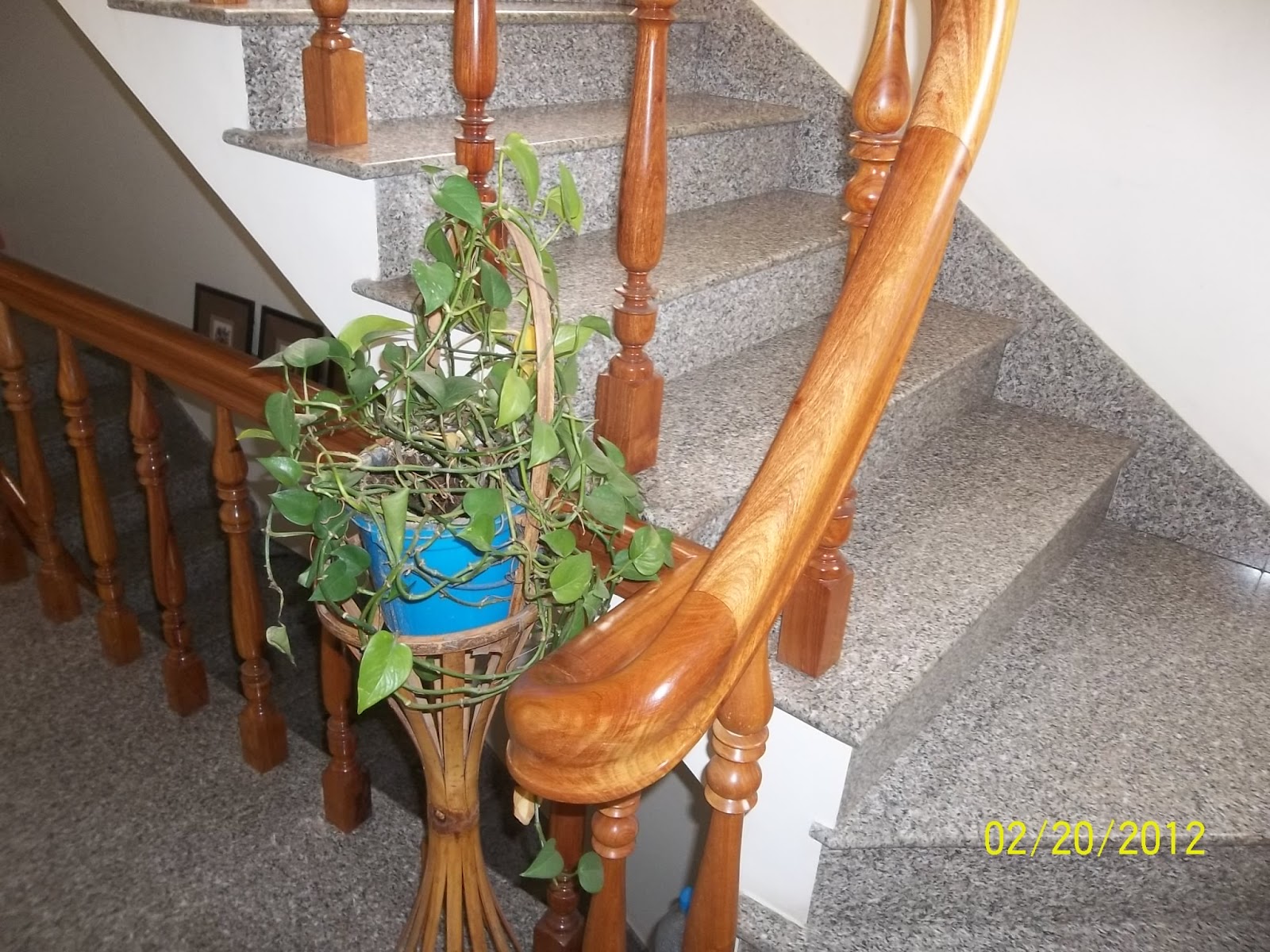
The town itself is really quite pretty with a decided French influence. Lots of 1930's era villas built in the tall narrow French style remain. Good streets, a nice lake in the middle of town. The people seem to know they have something special going here and do their best to keep it so. Our hotel is modern and convenient with a wonderful continental breakfast at the outrageous price of $25 a night. Of course, there's no elevator so we have to climb up and down granite stairs with gorgeous handrails. No air conditioning. There's a reason for that. Unlike most of Southeast Asia the temperatures here are like San Francisco. As Mark Twain quipped "The coldest winter I ever spent was a summer in San Francisco".The night we got here, it dropped into the mid 50's, jacket weather. Excellent climate for fruit, vegetables, wine grapes (Dalat red and white wines are quite good and served throughout Vietnam)  and especially flowers. I'm astounded. There's a huge market for flowers in the Communist Wonderland!
Yesterday, we partook of a Vietnam innovation called "Easy Riders".This one was and all day tour of the city and environs as passengers on 125cc motorcycles. Note I said motorcycle as opposed to motorbike. These were built to actually handle two-up riding and actually looked like a traditional motorcycle. Into the terror of Vietnam traffic seated behind a little guy on a small motorcycle. These guys are pros! They glided through traffic like eels, always keeping plenty of space from traffic, handling potholes and dirt roads with aplomb. They even spoke good English. Start with a view of Long Biang Mountail, overlook terraced farms, through Luwok coffee(!) through a silk factory to Crazy House and the Ralilway Station. You know what, I'm just going to give you a reference- http://wikitravel.org/en/Da_Lat - We saw most of the stuff in the middle of the page interspersed with riding up and down who-knows-how-many hills. It was a hell of a day! Better than roller coasters. I'd better give special mention to the Crazy House. On the other hand, it's next to impossible to describe. The architect has a special relationship with Escher.


Elephant Falls


The way down to the falls.
Even riskier than the motorcycle ride


Laughing Buddha


Silk Factory


Crazy House


Oldest railway station in Indochina
Railcar built in Hanoi, 1930's.


1930's Japanese steam engine.


In a perfect world, we'd probably spend more time here, but our visas are only good til March 2 and we're going to try to make that deadline in order to spend more time in Chiang Mai. This afternoon, we're off again to Hue, or maybe Hoi An. I suppose eventually we'll have to decide.

Monday, February 20, 2012

Liz on leaving Cambodia

An early van from Siem Reap to Phnom Penh, the capital city for the Kingdom of Cambodia  took us to our hotel for $11 each. We checked in to the Comfort Hotel II for $18 per night plus $1 for breakfast. No swimming pool but lots of TV channels. Internet was too old to be compatible for our new net book. The walk-up computers in the lobby were slow but adequate.

We walked around the block for lunch and then rode a tuk-tuk to the Cambodian National Museum. We saw artifacts in greater detail than in Angkor Wat. The next day we planned to visit The Royal Palace but we were outranked by the President of Ecuador. We saw the honor guard and palace from afar. We visited the palace’s neighbor for $6.25, The Silver Pagoda with its emerald (actually jade) Buddha. The floor is made of thick tiles of actual silver. We saw a film on anthropological digs by Germans and Australians to educate us to place value in village artifacts. Villagers simply do not know and so sell their priceless heirlooms for money to buy a tractor or satellite dish. A museum guide solicited us for $10, a nice wage for 90 minutes. He gave us regional background. He emphasized with a large map how South Vietnam was called Chams; it was a Muslim country independent of anywhere else in Asia. The Silver Pagoda is a showcase of Cambodian wealth with gold and silver Buddhas, some faded photos of Cambodia’s prince, elephant palanquins, a loom for silk.

Dancers practicing for a show at the National Museum


Shrubbery elephants outside the National Museum.
Unfortunately, no photography allowed inside.


On the grounds of the Silver Pagoda

Near the palace Mike had ATM trouble; the ATMs only gave out $100 bills, He grumbled that the machine might as well give out gold bars. How would he use that to pay a tuk-tuk driver their $2 or $3 dollar fare? Near The Silver Pagoda was a mall full of shops with skimpy, colorful clothes apparently for bar girls. Mike was shocked to see women’s knits for sale on this warm place. May be knits are bought by Northern European tourists or lady boys? He paid a coffee shop girl $5 for a cup of coffee if she would break $100. We had coconut cake too.

Later we sat along the Mekong River having pizza when a gifted 10 year old girl walked up with a box of books for sale. She said she’d find Mike a copy of any book he'd want. Mike chose the 2011 edition of Lonely Planet on Vietnam and bargained with her.
Meanwhile another little girl approached me to buy scarves. All too recently I unloaded my scarves from my 2004 trip to China and swore not to buy more. Unfortunately my little solicitor was seriously deformed. She had no fingers, apparently due to a ghastly birth defect; she had paws, not even her thumb was separated. Her state was all too overwhelming for me. Mike gave me Cambodian bills and I told her to take the donation and not disturb our dinner. And they disappeared but are not forgettable.
Later under Annoyances Lonely Planet discussed “Beggar Fatigue”.
We’ve just begun. I am not fatigued. My shock is fresh over the poor child without fingers. Mike was so taken by his child’s English and repartee. He told me how beautiful she was but really they are all beautiful, just gifted is rare.

The Cambodians in Siem Reap asked us about the issue of children selling to tourists. Tour guide Su Jett thought children ought not to sell merchandise because their families come to expect the income and it may cost a child their education. He said he paraphrased Lonely Planet. Tour driver Night (not so bright or articulate as Su Jet) thought that since schools operate only half day that it is OK for children to sell when school is not in session. Children learn a work ethic and they help their families before or after school. We all agreed with the UNESCO poster saying, “Children are not tourist attractions”.

Angkor Wat is a global destination because of guides like Su Jett. People with language skills are needed to speak to the Japanese, Thais, Turks, Finns, etc...  Yes, English is the lingua Franca but trips are better since Cambodia offers guides that speak many languages. Every nationality to visited appreciates someone who speaks to them .

Does it come down to parents? Children lack justice. Hopefully parents know them as unique individuals. Life is not fair. Life is difficult. One bright child like Su Jett learns 4 or 5 languages and makes a middle class living as a tour guide or teacher because his mother insists on protecting his education. Another child learns on the street and makes a living in the free market driving a cab and may earn just as much as Su Jett.

Cambodia’s genocide targeted city people, educated people, and in particular they lost a generation of teachers. Middle class working people like Mike and I would have died in the genocide. About 2 million were killed. The middle class raises children and when they are not alive to perform this critical role as in Cambodia it is a disaster. The middle class are the backbone of a society, not the rich or the poor.

Vietnamese tourist Visas are good for 30 days. Ours was bought ahead of time and expires on March 2. We may request an extension or make the trip fast. Border crossing by bus is much easier than it is to board a plane in a US airport.


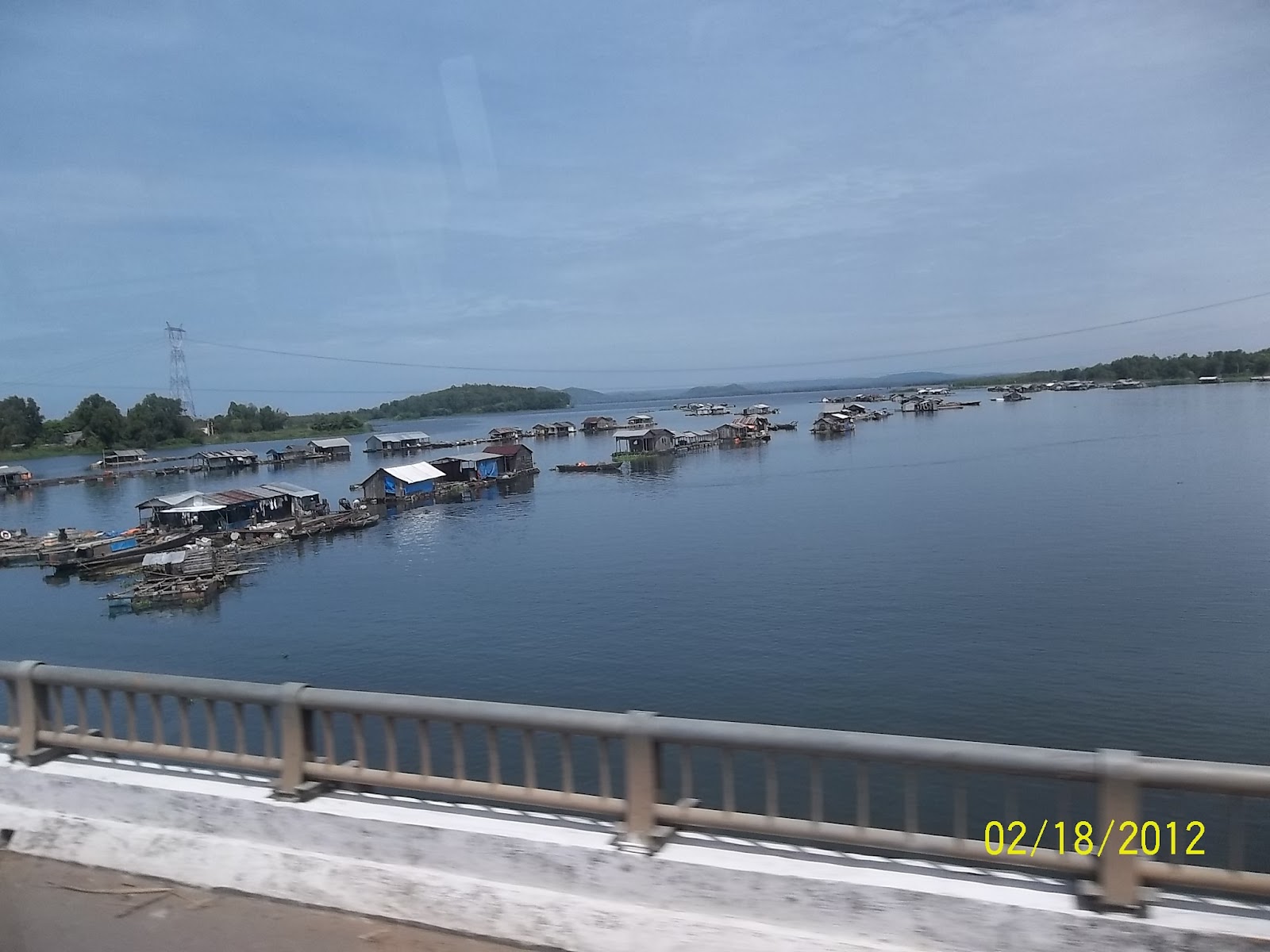
 Cambodia is not as poor as Afghanistan, the poorest nation in Asia followed by Myanmar. While in Phnom Penh we crossed the Cambodian-Japanese friendship bridge obviously a gift from Japan. Later the bus actually drove onto a ferryboat and crossed the Mekong River. On the ferryboat were 3 other buses besides ours. The crossing took minutes and then the bus ground its way up a muddy rutted riverbank and returned to the road. The countryside looked greener and more prosperous as our 6 hour bus ride progressed. By the time we crossed into Vietnam we were in a noticeably healthier economy (even though Cambodia has casinos along the Thai and Vietnamese borders). Not just farms but the roads and houses next to the highways are decent. Then approaching the city the roads, sidewalks and curbs are paved and organized with distinct lanes for buses and cars that are separated from motorbikes. I even saw a traffic light. Somehow Vietnam is prosperous, a far cry from the dust, red dirt and unpaved streets in Phnom Penh. Vietnam’s prosperity spills over into provinces in Cambodia making them far more prosperous than inland Cambodia.

This is Mike’s first trip to Ho Chi Minh City. He was not sent to Saigon when he was in the US Army in Vietnam for all of 1967. He did not serve or visit  duty stations in Ho Chi Minh City. He does not want to see the tunnels here either but he would like to see the tunnels near the DMZ where he was stationed. While he was stationed there his base was relentlessly bombarded by rockets.